BATTERY STORAGE · FIFE · 2026
Should I add a battery to my solar panels in Fife?
Last updated: November 2026
Quick answer: A battery is usually worth adding to solar panels in Fife because it stores the electricity your panels generate during the day so you can use it in the evening and overnight. Without one, much of your daytime generation is exported to the grid while you buy power back later at a higher rate. A battery closes that gap and is especially valuable in Scotland, where generation is concentrated in long summer days. Your survey models whether it makes sense for your usage.
Key facts:
- What it does: Stores daytime solar generation for evening/overnight use
- Why it matters in Fife: Lets you use your own power after dark, not just export it
- Capacity: Typically 5kWh to 13.5kWh, sized to your usage
- Retrofit: Yes — can be added to most existing solar systems
- Finance: Interest-free credit up to £30,000, subject to status
- Phone: 0141 230 0198
Call 0141 230 0198 or get a quote online. Interest-free credit available, subject to status. We install through MCS-certified partners.
How does battery storage work?
A home solar battery sits between your panels and your household electrical system. During the day, your panels generate electricity — and whatever you do not use immediately charges the battery instead of being exported to the grid. In the evening and overnight, when the panels are not producing, your home draws from the battery before drawing from the grid. The result is that you use more of your own solar generation and buy less electricity from your supplier.
Most modern batteries are managed by a smart inverter and a monitoring app, so you can see in real time how much you are generating, storing and using. If you are on a time-of-use tariff, many batteries can also charge from the grid on cheap overnight electricity and discharge it during the expensive evening peak — useful in winter when solar generation is low. We install through MCS-certified partners who set up the system and show you how the app works.
Which brands are available?
Our installer partners fit a range of battery brands, and the right one depends on the capacity you need, the physical space available, and whether you want features like backup power. Common brands in the Scottish market include Fox ESS, Duracell and Tesla Powerwall, among others. Each has different capacity options, warranty terms and integration with solar inverters.
Your installer partner does not push a single brand. During the survey they assess your usage, your existing setup (if you already have solar), and your preferences, then recommend the battery that fits. If you already have solar panels with a particular inverter, that may influence which batteries are compatible. The survey covers all of this, and your quote itemises the recommended brand, capacity and warranty so you can compare like for like.
How much does a battery cost?
Battery cost is driven mainly by capacity — measured in kilowatt-hours (kWh) — and by the brand. A larger battery stores more energy but costs more. Whether you install the battery at the same time as solar or retrofit it later also affects the price, because a combined install shares scaffolding and labour costs. There is no single fixed price because the right battery size depends on your usage, and we do not quote figures without a survey.
Interest-free credit up to £30,000, subject to status. That means you can spread the cost of a battery — on its own or alongside solar — with monthly payments rather than paying upfront. Your advisor goes through the cost and the monthly payment figure after the survey, so you see the full picture before deciding.
Can I retrofit a battery?
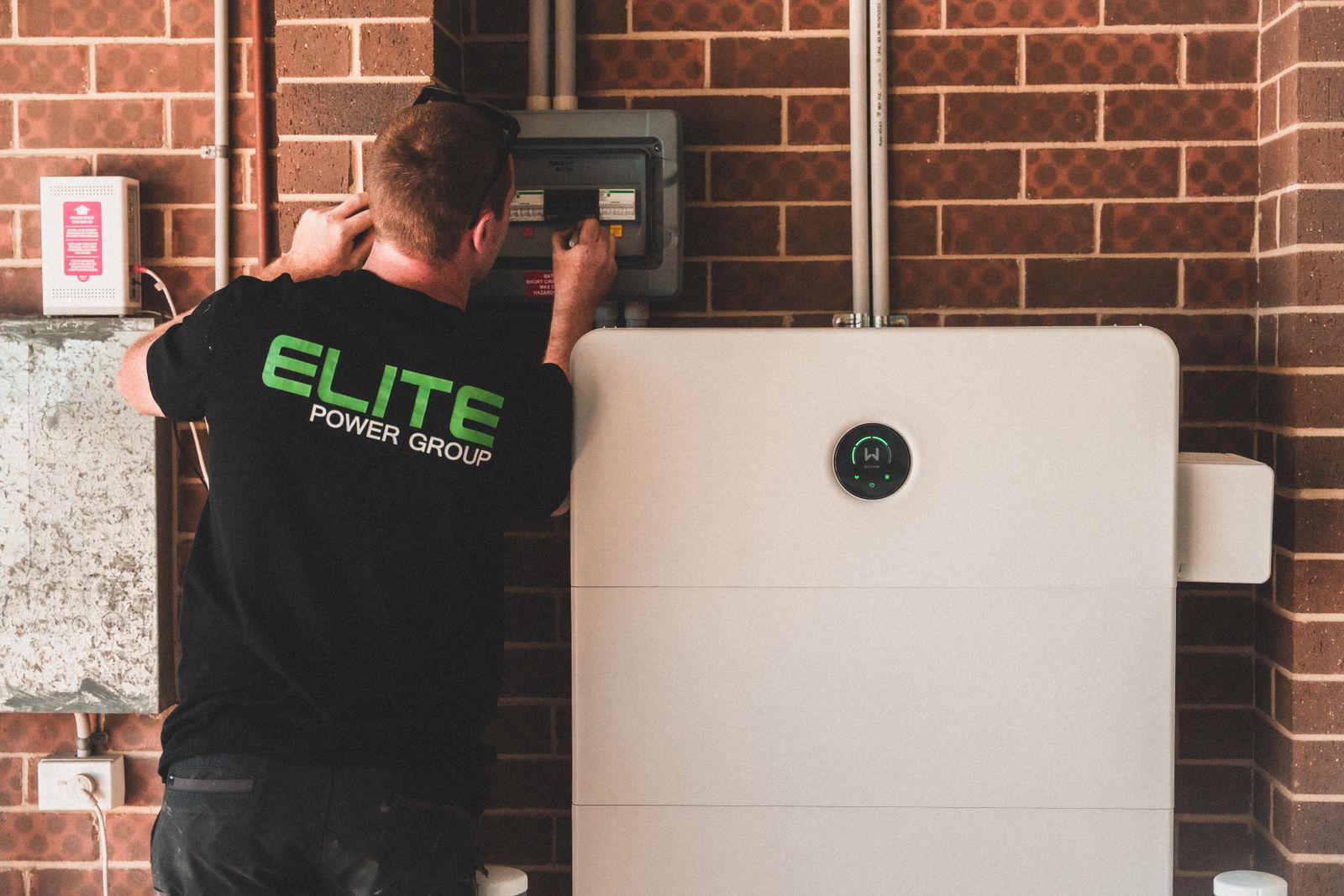
Yes. If you already have solar panels, our installer partners can add a battery to most existing systems. The most common route is an AC-coupled battery, which connects on the AC side of your existing inverter, so you do not need to replace your current solar inverter. Retrofitting is typically a straightforward installation — the battery unit is mounted on a wall (often in a garage, utility room or loft) and wired into your consumer unit.
Your survey confirms compatibility with your existing setup and gives you a priced retrofit quote. If your existing inverter is nearing the end of its life or you want to upgrade to a hybrid inverter, that can be discussed at the same time. The key point is that adding a battery later is entirely possible — you do not have to have bought everything at once.
How long do batteries last?
Most home solar batteries carry a 10-year manufacturer warranty. Lithium-ion batteries — the type used in virtually all modern home storage — typically retain a high percentage of their original capacity across that 10-year period, though actual degradation depends on how heavily the battery is cycled each day. A battery that is charged and discharged fully every day will age faster than one that sees lighter use.
Your installer partner explains the specific warranty terms for the recommended brand at survey, including any throughput (total energy cycled) limits. As a rule of thumb, you can expect a well-sized battery to still be performing well beyond its warranty period, and the monitoring app lets you track capacity over time. For context, solar panels typically carry a 25-year performance warranty, so a battery may be replaced once during the lifetime of the panels — something worth factoring into your long-term plan.
Frequently asked questions about battery storage
Do I need a battery to make solar worthwhile in Fife?
Not strictly, but a battery usually improves the economics — especially in Scotland where much of your generation happens in summer when you may be out. Without a battery you export surplus generation at the SEG rate and buy it back in the evening at a higher rate. A battery lets you use your own power after dark, which is where the real saving is. Your survey models both scenarios.
What size battery should I get?
Battery size depends on your evening and overnight electricity use and how much surplus your panels generate. Common capacities range from 5kWh to 13.5kWh. A smaller household might be well served by 5kWh; a larger home with a heat pump or EV may benefit from more. Your installer partner sizes the battery to your actual usage at survey.
Can I add a battery to solar panels I already have?
Yes. Our installer partners can retrofit battery storage to most existing solar installations. An AC-coupled battery is fitted alongside your existing inverter, so you do not need to replace the whole system. Retrofitting is usually straightforward and your survey will confirm compatibility with your current setup.
How long does a battery last?
Most home solar batteries carry a 10-year manufacturer warranty, and lithium-ion batteries typically retain a high percentage of their capacity across that period. Actual lifespan depends on how heavily it is cycled. Your installer partner explains the warranty terms for each brand at survey.
Does a battery work with a time-of-use tariff?
Yes, and it can add real value. On a time-of-use tariff you can charge the battery on cheap overnight electricity and use that stored power during the evening peak, even when your panels are not generating. Your survey can model this alongside solar self-consumption so you see the combined benefit.
Get a quote
Read more: solar panel costs in Fife, is solar worth it in Scotland, and full Fife solar FAQ. Or call 0141 230 0198 to discuss battery options.
Reviewed by the Scottish Energy Efficiency team — last updated October 2026