Last updated: November 2026
Solar Panels in Rosyth (KY11)
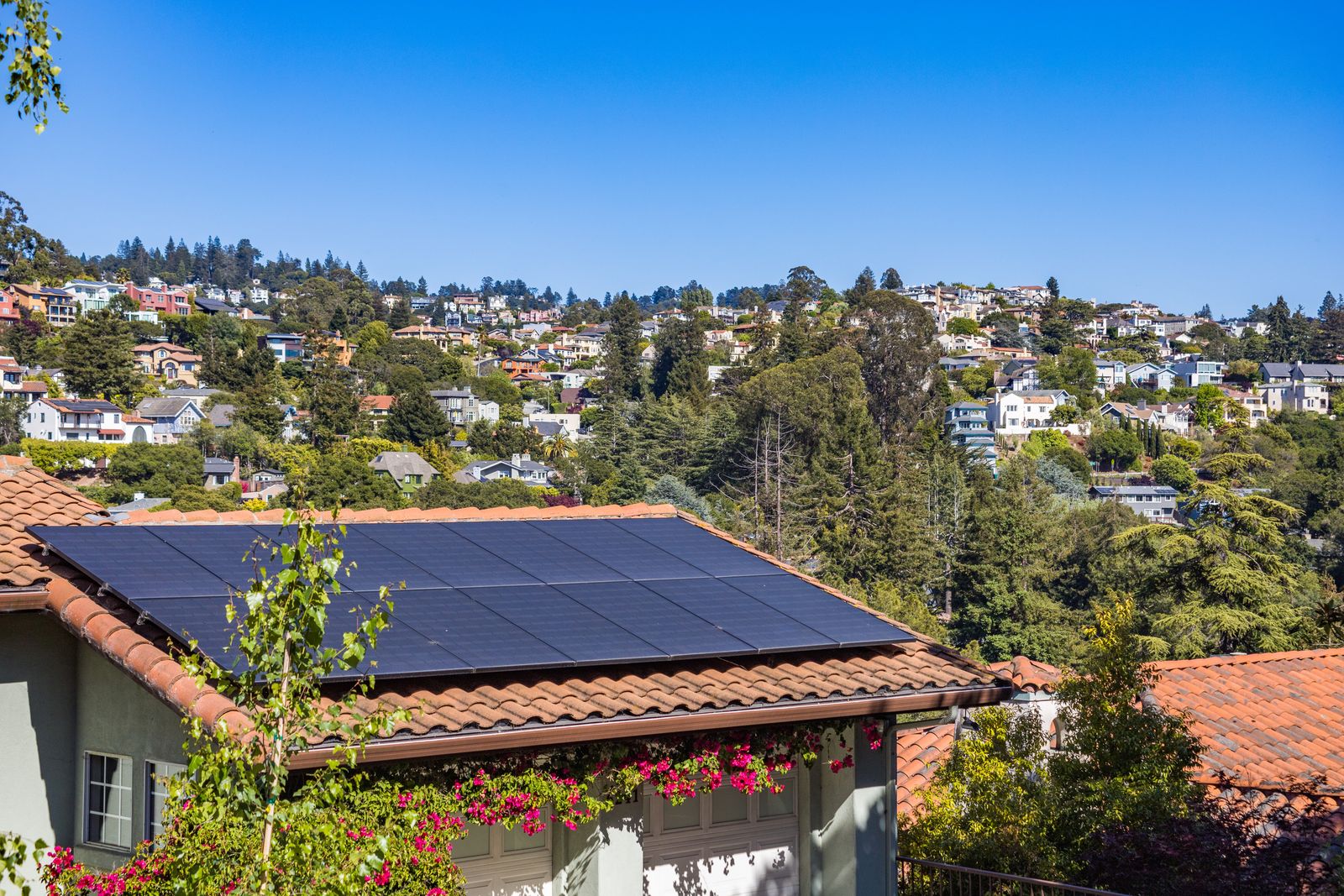
Is Rosyth suitable for solar panels?
Quick answer: Is Rosyth a straightforward area for solar panel installation? The town's twentieth-century housing, standard pitched roofs and absence of conservation area constraints make it one of the simplest areas for solar in Fife, with most homes qualifying for permitted development.
Rosyth was developed in the early twentieth century as a garden city-style settlement to serve the royal dockyard, and that planned origin produced a remarkably uniform housing stock. The residential streets around Parkgate, the erstwhile corporation housing along Queensferry Road and the estates off Admiralty Road are predominantly local authority semis and terraces with standard pitched roofs, concrete interlocking tiles and trussed rafter construction. Unlike Dunfermline's historic core to the north or Inverkeithing's medieval centre to the east, Rosyth has no conservation area covering its residential zones, and listed buildings are minimal. This means the overwhelming majority of homes qualify for permitted development and can proceed without a planning application.
The street layout in the older part of Rosyth follows a regular grid, which produces predictable roof orientations — many properties have a south-facing gable slope that's ideal for solar capture. The later developments around Rosyth Castle Way and the housing toward the waterfront are similarly conventional, with concrete-tile pitched roofs and no heritage overlay. Orientation varies plot by plot, but the grid pattern means we can usually identify a productive plane on any given property.
Rosyth's position on the Firth of Forth means the lowest-lying properties near the dockyard and waterfront see mild coastal exposure, but it's far less severe than the open North Sea towns on the east coast, and standard hardware is adequate across the town. The grid in KY11 is operated by SP Energy Networks, and the dockyard-adjacent infrastructure means local network capacity is generally robust — export of surplus generation is rarely an issue. We install through MCS-certified partners throughout Rosyth, and the combination of uniform housing, no conservation constraints and straightforward roof structures makes this one of the most predictable areas we work in.
Rosyth — your questions answered
Do I need planning permission for solar panels in Rosyth?
Almost never. Rosyth has no conservation area covering its residential zones and very few listed buildings, so the overwhelming majority of homes qualify for permitted development. We check each address at survey, but planning applications are rare here.
Are the local authority semis in Rosyth structurally suitable for solar?
Yes. The council-built semis and terraces across Parkgate and Queensferry Road have standard trussed rafter roofs with concrete interlocking tiles, which are well within the load tolerance for a residential solar array. Roof condition is confirmed at survey.
Does the dockyard location cause any issues for solar?
No. The dockyard doesn't affect solar performance, and the surrounding infrastructure means the local grid in KY11 is relatively robust, so exporting surplus generation is rarely restricted. Properties nearest the waterfront see only mild coastal exposure that standard hardware handles comfortably.
My roof faces east-west rather than south — is that still worth doing in Rosyth?
Yes. East-west arrays produce a broader generation curve across the day, which suits households using power in mornings and evenings. Many of the grid-aligned streets in Rosyth produce east-west roof planes, and we design the system to make the most of whichever orientation your property offers.
Neighbouring areas we cover
Services available in Rosyth
- Solar Panels — Rosyth
- Battery Storage — Rosyth
- Heat Pumps — Rosyth
Get a no-obligation quote for your Rosyth home
Call direct: 0141 230 0198 or complete our 2-minute survey.
Reviewed by the Scottish Energy Efficiency team — last updated October 2026